

NASA Reports ‘City-Killer’ Asteroid 2024 YR4 Now Has a 3.1% Chance of Impact with Earth
NASA has recently announced that asteroid 2024 YR4, a space rock with the potential to cause catastrophic damage to a city, now has a 3.1% chance of colliding with Earth. The asteroid is being closely monitored by global astronomers, with data showing a steadily increasing likelihood of impact. Despite this, experts stress that there is no immediate cause for panic, and the asteroid’s trajectory is still under investigation.
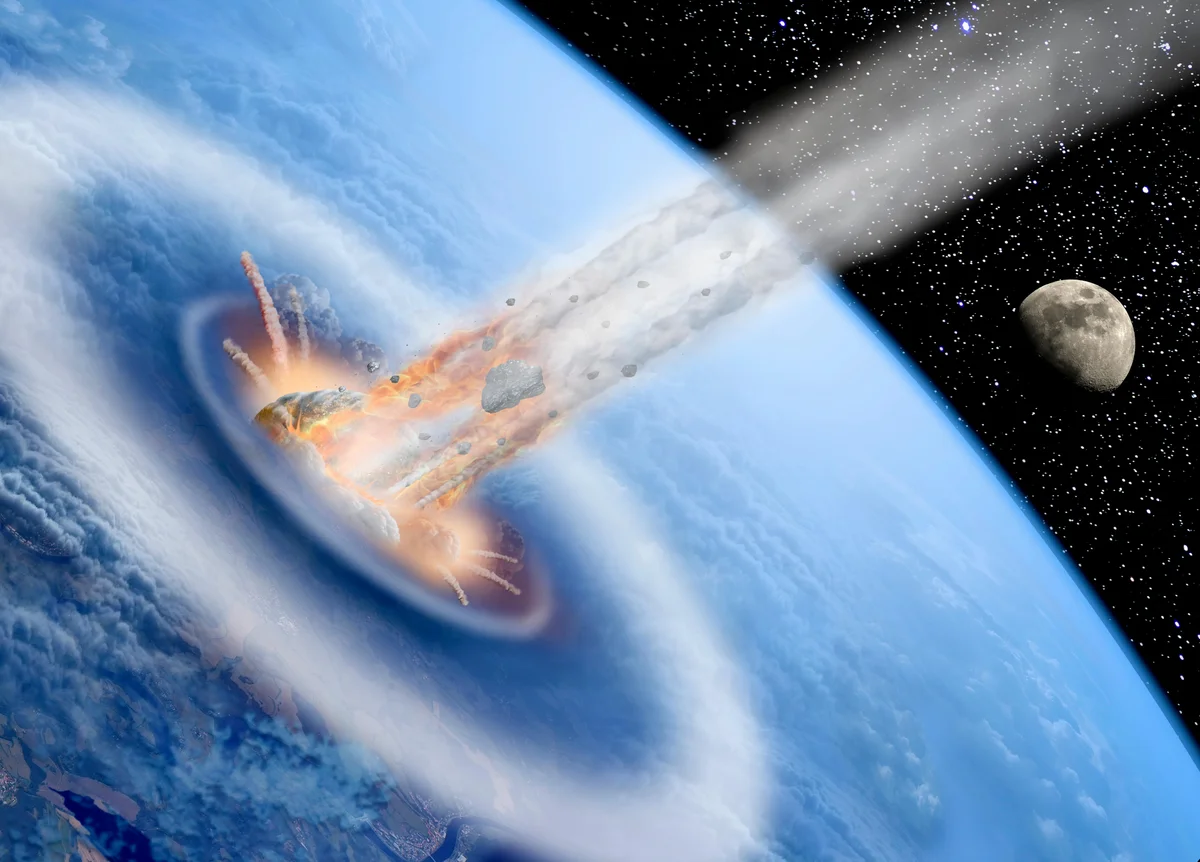
Rising Odds of Impact
On February 18, 2025, NASA shared updated calculations on the asteroid’s impact risk, indicating a 3.1% chance of it striking Earth on December 22, 2032. Although the odds are rising, scientists emphasize that further data collection and observation are expected to reduce the probability in the future. Bruce Betts, the chief scientist for the Planetary Society, reassured the public by stating that there is no need to panic, and that the chances will likely fluctuate before ultimately decreasing to zero.
The asteroid 2024 YR4 was first discovered on December 27, 2024, by the El Sauce Observatory in Chile. Scientists estimate its size to be between 130 and 300 feet (40-90 meters) wide, a significant size capable of causing substantial damage if it were to impact a populated area. Despite its relatively average composition, based on its light signatures, it poses a real threat due to its potential velocity.
International Collaboration and Monitoring
The International Asteroid Warning Network (IAWN), a global collaborative effort focused on planetary defense, issued a warning in late January 2025 when the asteroid’s impact probability exceeded 1%. Since then, the likelihood of impact has been updated, but it is still being carefully monitored. The James Webb Space Telescope, set to observe the asteroid next month, will provide crucial information that could offer more clarity on its trajectory.
Richard Moissl, head of the European Space Agency’s planetary defense office, emphasized that the risk, while significant, does not pose a global threat akin to the asteroid that wiped out the dinosaurs 66 million years ago. “This is a city killer, not a planet killer,” Moissl said. “While it’s a very rare event, there is no immediate crisis.”
Potential Consequences of Impact
If asteroid 2024 YR4 were to impact Earth, its consequences would be devastating but not apocalyptic. Depending on its size, the asteroid could travel at speeds of up to 40,000 miles per hour (64,000 km/h). A direct collision with Earth could cause an airburst, where the ATD explodes mid-air, releasing an energy equivalent to 8 megatons of TNT. This is over 500 times the power of the atomic bomb dropped on Hiroshima during World War II.
Although the impact of this asteroid would be destructive on a regional scale, experts agree that the destruction would likely be confined to a city or large urban area rather than causing widespread global damage. The asteroid’s potential impact corridor includes regions such as the eastern Pacific, northern South America, the Atlantic, parts of Africa, and South Asia, but scientists caution that it is too early to make decisions about evacuation or relocation.
How Space Agencies Are Preparing
With the potential for disaster still years away, NASA and other space agencies have time to develop plans to address the threat. Recent breakthroughs, such as NASA’s 2022 DART mission, have demonstrated the possibility of altering an asteroid’s path through spacecraft technology. Scientists have also proposed several other strategies for diverting an asteroid’s trajectory, including using lasers to vaporize part of its surface, applying gravitational forces with spacecraft, or even using nuclear explosions in extreme cases.
Although the risk is currently low, ongoing observation and preparation are essential. If the probability of impact rises above 10%, the IAWN would issue a formal warning, prompting countries within the potential impact zones to begin preparing for possible mitigation strategies.

Conclusion
While the likelihood of asteroid 2024 YR4 striking Earth in 2032 remains small, it represents a growing threat that requires global attention. Experts stress the importance of continued observation, with the James Webb Space Telescope poised to provide further insight into the asteroid’s movement. At this point, there is no need for public panic, but the potential for significant local destruction is real. Fortunately, there is still time for space agencies to take necessary actions to protect Earth and its inhabitants.


