

By NEGMAR LAMA
Updated: March 9, 2025
Federal immigration authorities arrested Palestinian activist Mahmoud Khalil on Saturday, escalating the Trump administration’s efforts to detain and deport student activists involved in pro-Palestinian protests.
Khalil, a former graduate student at Columbia University, was taken into custody at his university-owned apartment in Manhattan by Immigration and Customs Enforcement (ICE) agents. His attorney, Amy Greer, reported that the arrest was carried out under the State Department’s orders, initially citing the revocation of Khalil’s student visa. However, when Greer informed the agents that Khalil was a legal permanent resident with a green card, they stated that his green card was being revoked instead.
A Department of Homeland Security (DHS) spokesperson, Tricia McLaughlin, confirmed the arrest, linking it to President Trump’s executive orders aimed at combating antisemitism. Khalil’s detention marks the first publicly known deportation attempt under the administration’s crackdown on students accused of supporting Hamas through their activism against the war in Gaza.
Arrest Sparks Outrage and Fear
The circumstances of Khalil’s detention have raised alarm among legal experts and civil rights advocates. Greer stated that ICE agents also threatened to arrest Khalil’s wife, who is eight months pregnant and a U.S. citizen, during the raid on their home.
Initially, Khalil was believed to be held at an immigration detention facility in Elizabeth, New Jersey. However, when his wife attempted to visit him on Sunday, she was informed that he was not there. As of Sunday night, his exact whereabouts remained unknown.
“This is a clear escalation. The administration is following through on its threats,” Greer told the Associated Press, expressing concerns over the legality of Khalil’s detention.
Columbia University’s Response and Legal Uncertainty
Columbia University has yet to make a direct statement on Khalil’s arrest. A university spokesperson noted that law enforcement must present a warrant before entering university property but declined to confirm whether one had been issued.
Meanwhile, Secretary of State Marco Rubio took to social media on Sunday evening, stating that the administration “will be revoking the visas and/or green cards of Hamas supporters in America so they can be deported.”
Legal experts have voiced concerns over the arrest, noting that while DHS can initiate deportation proceedings against green card holders for alleged criminal activity, Khalil has not been charged with a crime. Camille Mackler, founder of Immigrant ARC, called the detention an extraordinary action, suggesting it was a “retaliatory move against someone who expressed an opinion the Trump administration didn’t like.
A Leading Figure in Columbia’s Protests
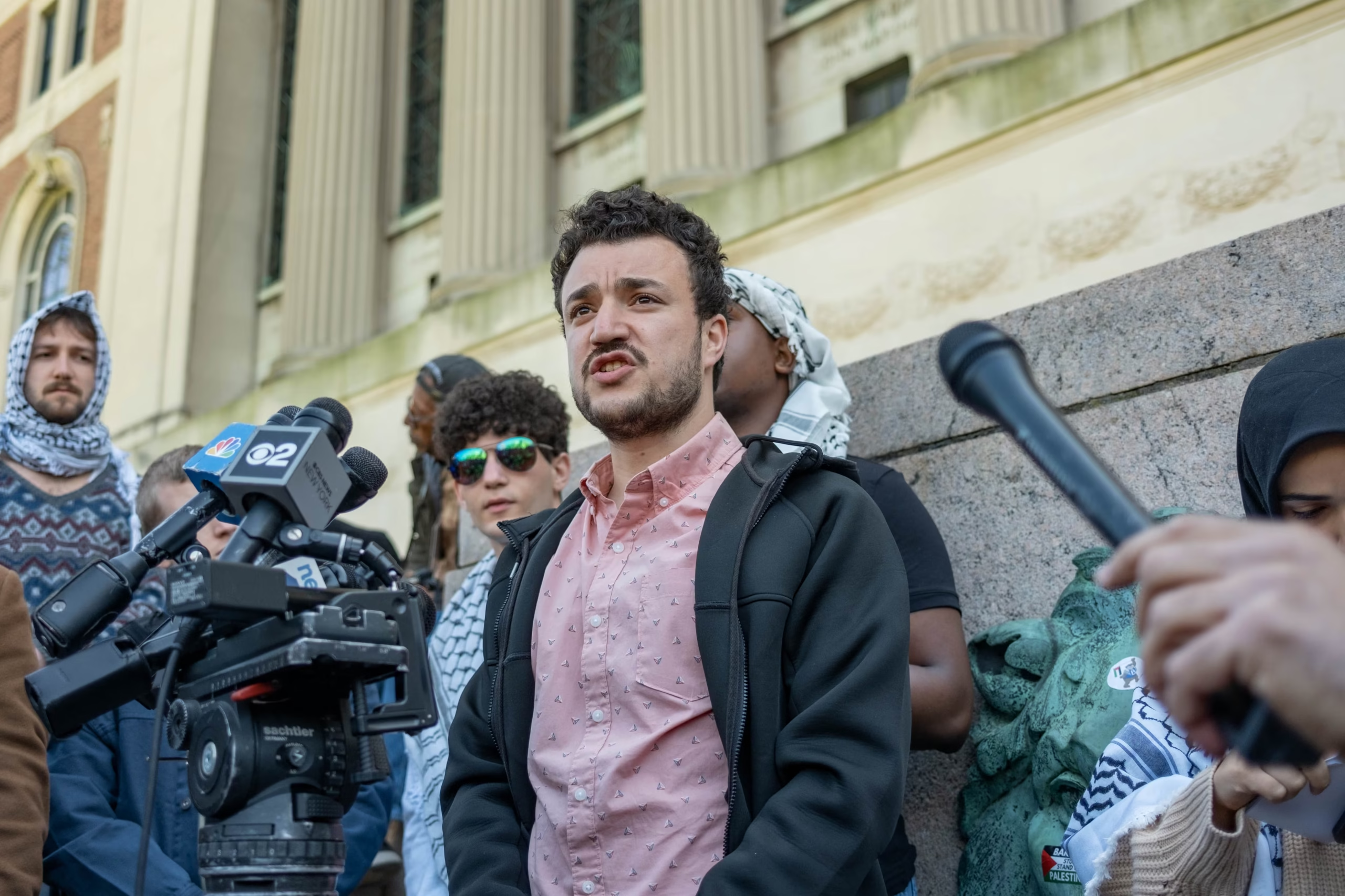
Khalil was a key negotiator for Columbia students involved in last spring’s pro-Palestinian encampment protests, making him a visible leader in the movement. His activism led to calls from pro-Israel groups urging the administration to take action against him.
Columbia University had also placed Khalil under investigation through a new office created to discipline students engaged in pro-Palestinian activism. According to documents shared with the Associated Press, the university accused Khalil of organizing an “unauthorized marching event” that allegedly glorified Hamas’ Oct. 7, 2023, attack and of playing a substantial role in circulating social media posts criticizing Zionism.
Khalil, however, dismissed these allegations. “I have around 13 allegations against me, most of them are social media posts that I had nothing to do with,” he said last week. “They just want to show Congress and right-wing politicians that they’re doing something, regardless of the stakes for students. It’s mainly an office to chill pro-Palestine speech.”
Broader Crackdown on Columbia University
The Trump administration has been targeting Columbia University, following through on threats to cut hundreds of millions of dollars in federal funding due to what it claims is the school’s failure to address antisemitism on campus. The crackdown has led to investigations and disciplinary actions against dozens of students involved in pro-Palestinian activism.
Khalil’s arrest has intensified concerns that the administration’s measures are aimed at silencing dissent rather than addressing security concerns. Advocacy groups warn that targeting students based on political beliefs could set a dangerous precedent, raising legal and ethical questions about the government’s use of immigration enforcement as a political tool.
As Khalil’s legal team fights to determine his whereabouts and challenge his detention, the case is likely to become a focal point in the ongoing debate over free speech, student activism, and the Trump administration’s policies on immigration and national security.


