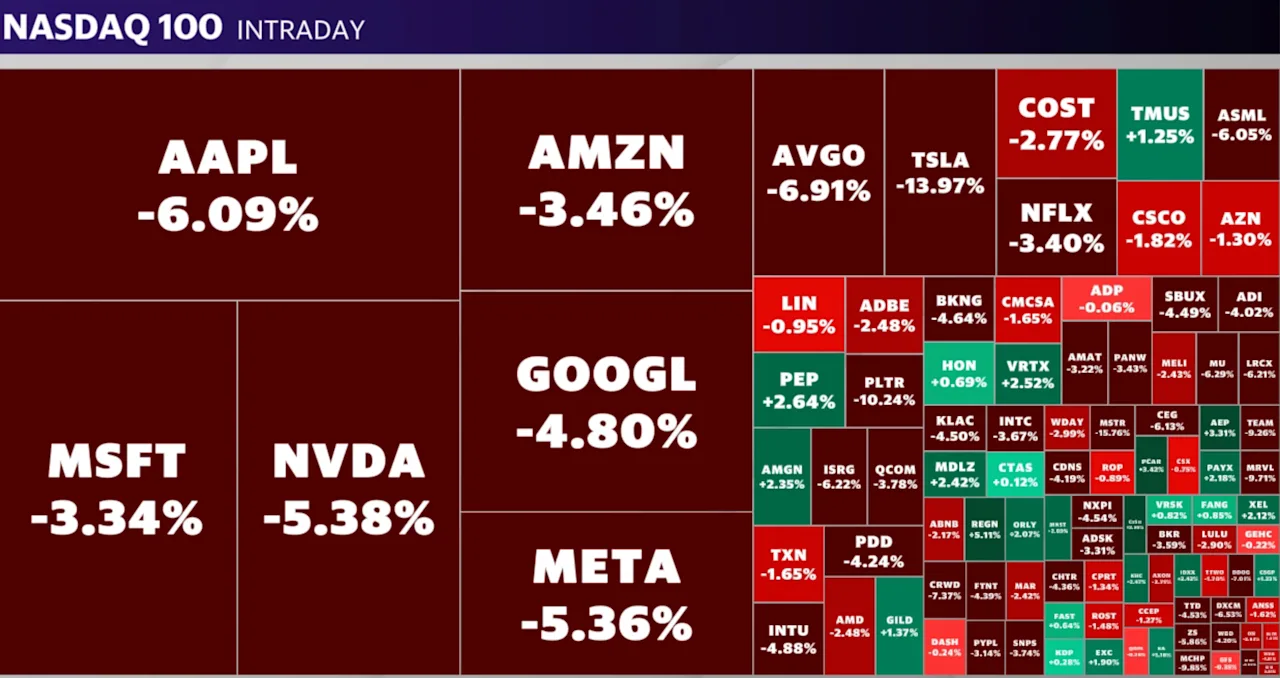
The US stock market experienced a major sell-off on Monday as investor concerns about the economy intensified. The Dow Jones Industrial Average (^DJI) plummeted over 1,000 points, marking a more than 2% decline. Meanwhile, the S&P 500 (^GSPC) sank around 3%, following its worst week since September. The Nasdaq Composite (^IXIC) took the hardest hit, nosediving nearly 5%, its worst daily drop since 2022.
Tech Stocks Lead the Decline
The sell-off was led by major technology companies, with the so-called “Magnificent Seven” stocks seeing significant losses. Tesla (TSLA) continued its sharp downturn, plunging more than 14% and wiping out its post-election gains. Nvidia (NVDA), Apple (AAPL), Google (GOOG), and Meta (META) all saw their shares drop more than 5% as investors abandoned high-growth tech stocks.
The Nasdaq’s heavy losses extended the previous week’s decline of over 2%, with traders reacting to economic uncertainty and political turmoil.
Economic Worries Intensify Amid Trade Policy Concerns
Concerns over the US economy have escalated following comments from President Trump and his top economic officials, acknowledging potential economic turbulence. In a Fox News interview on Sunday, Trump described the economy as being in “a period of transition,” fueling uncertainty among investors.
Adding to the anxiety are ongoing trade negotiations between the US, Mexico, and Canada, as well as uncertainty surrounding tariffs Stock. Goldman Sachs further stoked fears by cutting its US economic growth forecast for 2025 from 2.4% to 1.7%, citing Trump’s increasingly aggressive trade policies. Chief economist Jan Hatzius warned that rising tariffs would weigh on consumer spending, tighten financial conditions, and lead to delayed business investments.
Key Market Movers
- Tesla (TSLA): Plummeted 14%, reaching its lowest level since November 2024.
- Nvidia (NVDA): Dropped 5%, contributing to the broader tech decline.
- Alphabet (GOOG, GOOGL), Amazon (AMZN), Meta (META): Each saw substantial losses as risk sentiment soured.
- Bitcoin (BTC-USD): Fell below $80,000, down over 4% as market risk-off sentiment intensified.
- Safe-haven sectors: Utilities (XLU), Energy (XLE), and Consumer Staples (XLP) saw slight gains as investors fled risky assets.
Inflation Data and Fed Policy in Focus

Investors are bracing for key economic reports later this week, with the Consumer Price Index (CPI) for February set for release on Wednesday, followed by the Producer Price Index (PPI) on Thursday. These reports will provide critical insight into inflation trends and could influence the Federal Reserve’s stance on interest rates.
Despite the market turmoil, some analysts believe the Federal Reserve will remain cautious, waiting for more clarity before making rate adjustments. Hatzius from Goldman Sachs expects two interest rate cuts this year, but uncertainty surrounding trade policy may keep the Fed on the sidelines for now.
Outlook: More Volatility Ahead?
With political uncertainty, inflation data on the horizon, and ongoing trade negotiations, market volatility is expected to persist. Analysts warn that further downward pressure could emerge if economic conditions worsen or if the Federal Reserve takes a more hawkish stance.
As investors navigate this turbulent environment, the coming weeks will be critical in determining whether this sell-off is a short-term Stock out or the beginning of a prolonged downturn in the market.
About the Author